Courageous Parenting
by Elder Larry R. Lawrence
Of the Quorum of the Seventy
Um, I love this talk. Read. Let’s discuss. 🙂
New to General Conference Book Club? Go here.
Courageous Parenting
by Elder Larry R. Lawrence
Of the Quorum of the Seventy
Um, I love this talk. Read. Let’s discuss. 🙂
New to General Conference Book Club? Go here.

Today I’m happy to introduce you to Amber. She and I have not met in person (yet), but I’m excited you get the chance to meet her today the same way I did– through her writing. Amber is a kind blog friend who always drops by and leaves nice comments, and whenever I visit her blog, I’m impressed with her candor and her “voice.” She’s been very open about her struggles and personal challenges and I believe her readers feel safe with her. Without further ado, here’s Amber.

Before I begin, I want to thank Stephanie profusely for allowing me to introduce myself to all of you. Stephanie is a wonderful writer who often reminds me to look at the Eternal perspective of motherhood rather than the rather dreary aspects. Thank you, Stephanie! (You’re welcome, Amber. Aw, shucks.)
My name is Amber. I am 23 and married to my high school sweetheart. (Granted, I was in high school and he was, ahem, graduated when we started dating, but I still think it counts.) We married shortly after he returned home from his mission–in which we kept up a correspondence–and made sure to keep things busy from the beginning by having 2 kids within 14 months of each other (Emily, 2 1/2, and Andrew, 15 months). And we were both in school. Trial by fire? We’ve got that covered. As crazy as it can be, I would do it all over again in an instant and we both hope to add more to our brood in the coming years. Right now we hail from the great desert of Utah but will soon be relocating to the Midwest for the wonderful, new adventure of medical school (my husband, not me).
I am from Boise, originally, and came from a large family: I am the second of ten. I was–and am–probably the most motherly of our clan. As soon as I reached a mature age, I was taking care of the little ones as much as I could. I suppose my most positive attribute, then and now, was my ability to put work first. My mother often recounts stories of me cleaning up after both my sisters when we shared a room. Even as I grew older, I would try to complete my chores before reading my books or doing my homework unless my mother excused me from these duties.
As my parents had not considered college, they felt it pertinent that their children not follow in their footsteps and greatly encouraged us to prepare for college at a young age. I knew exactly where I wanted to go by the time I was in 4th grade: BYU. I accomplished this dream and graduated with a BS in Marriage, Family, and Human Development shortly before Andrew was born. Even though it was difficult being a student, mother, and wife I knew I needed to complete my education–no matter the sacrifice.
This attitude of perseverance has helped support me as I support Ben in his school and work aspirations. Though I know our road is a long one, I do believe that in the end it will be worth it if my husband is doing something he really loves.
1. What’s your favorite part of motherhood?
2. What part of motherhood would you subcontract out if you could?
3. Name 2 or 3 items on your “bucket list.” (Some things you’d like to do before you die.)
4. Brag for a minute. Do it. What are a few things that you’re pretty good at?
5. What are you loving lately?
6. Do you have a favorite scripture or quote? Why?
“Rather than being judgmental and critical of each other, may we have the pure love of Christ for our fellow travelers in this journey through life. May we recognize that each one is doing her best to deal with the challenges which come her way, and may we strive to do our best to help out.” President Thomas S. Monson, Relief Society broadcast in October.
7. What do you gravitate toward during your unscheduled time?
8. Tell us some of your best mom-tricks (things you’ve figured out that work well for you).
9. What’s something you don’t usually want people to know about you, but that they need to know if they’re going to be your friend?
First, I am very socially conscious. I often take the perspective of someone who has grown up in different circumstances and with different values when engaging in a serious conversation. I am also very scientific in my conclusions so will poke holes in theories often postulated in the media. Many people find my beliefs “liberal” or “unconventional” but, as cliche as this sounds, I try my hardest to use Jesus as an example for how I think about issues.
Second, I laugh. A lot. Especially when I am uncomfortable. So if we do engage in a serious conversation, I will most likely insert quite a few self-deprecating jokes and laugh at things in a slightly awkward manner. In some ways, this can be very offensive to people. But I am not making fun of other’s opinions when I laugh, it is a nervous habit I’ve developed.
10. If you were in charge of a girls’ night out, what kind of activity would you love to plan?
11. Friends are great for venting. What’s been frustrating you lately?
12. What parts of your testimony are you the most sure of?
Emily’s favorite song is “I Love to See the Temple.” It has become a favorite of mine as well. After I had a recent miscarriage, I took comfort in listening to Emily sing this song over and over again. I know with all my heart that families can be together.
I also know that Heavenly Father cares for each and every one of us. No matter how simple our problems might seem he wants us to come unto Him.
Tell us about your blog:
I blog at Making the Moments Count. I write about my struggles with anxiety and depression; about my intense love for my husband and children; and occasionally about social issues. I also do a weekly meme in which readers are encouraged to write about their triumphs in parenting–whether in philosophy or in specific moments–during the week and link up so we can support and build each other. My main purpose is promoting a community of understanding and support in parenthood so that we can see how various methods work for different people and that there is not one particular way to parent children.
Thanks, Amber! Wasn’t that great? Next week, we’ll meet another new friend. Watch your email inbox; it might be you! If you want to get in on the fun, add a comment on this post. I’ll do a random selection from there every week.

I played basketball tonight for the first time in ???? years. Full court, two 15-20 minute halves. Final score 70-something to 60-something. Not bad, huh? (I’m pretty sure I made less than 10 points, but I did not die, which felt like a major accomplishment.) It was really fun, but I’m already afraid to wake up in the morning. There’s nothing like a few sprints up and down the court to remind you you’re not as young and spry as you used to be.
It feels good to do something I used to love and haven’t done for a long time. Feels good in a my-muscles-might-combust-and-I-may-perish kind of way, but still.
(I could have written about how I’ve had the same dirty dishes in my sink for two days and accidentally forgot to show up to a meeting last night that I was in CHARGE of, but this seemed more satisfying.)
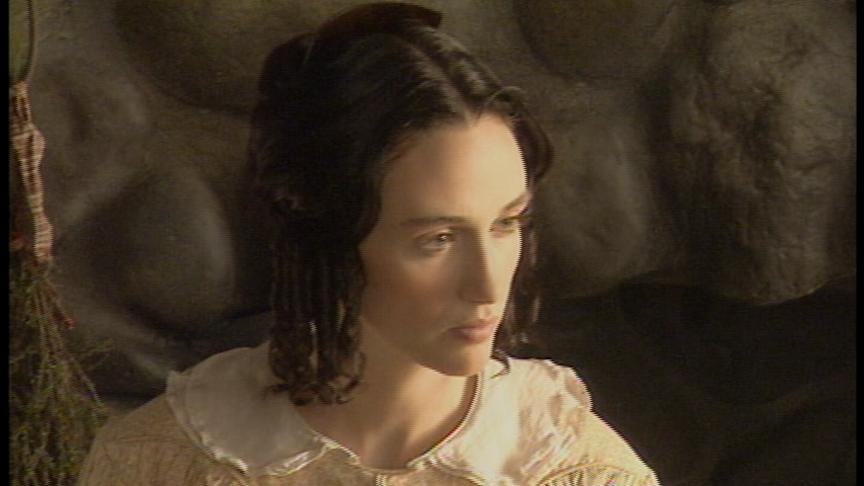
We all know that behind every good man is a great woman, so it goes to reason that behind a great man is a remarkable woman. Emma Smith was no exception. In the early 1800s, Joseph Smith was called at a young age to be the inexperienced prophet of a long-prophesied Restoration of the church that Jesus Christ had established while upon the earth. Joseph became an instrument in the hands of God and the leader of a fledgling church, both assignments which laid heavy burdens upon him and made him the target of much opposition. Despite his unprecedented faith, his undying work and perseverance, and his naturally pleasant nature, he was often downtrodden. His suffering was sometimes unimaginable. During this long refiner’s fire that the Prophet Joseph was chosen to endure, God saw fit to bless him with the company and support of a good woman, a help-meet in every sense of the word.
Emma Smith was a ministering angel in the flesh to her prophet husband. She faced the same threats, trials, and discouragement that Joseph did, and notwithstanding her own suffering, she offered much-needed support to him and consistently reached out to others in service. As expected with any female figure who plays an important role in the history of mankind, Emma and her story are somewhat controversial. Her motives and choices are sometimes questioned, especially during the period after her husband’s martyrdom. We cannot begin to imagine the depth of her sorrow or the extent of her exhaustion on every level– physical, emotional and spiritual exhaustion– by the point that her husband was murdered. I’m afraid that she is one of the most misjudged characters in Church history, if not in the overall history of modern religion.
I have a dear friend who, because of her own personal testimony and because of opportunities given to her by her Heavenly Father, has made it one of her life’s missions to dispel the myths about Emma Smith. She has dedicated years of study and prayer and thought to understanding Emma’s life, Emma’s history, and Emma’s heart. This past weekend, she was invited to be the keynote speaker at a historical convention in Nauvoo, Illinois to speak about Emma’s story. She felt overcome by the weight of the assignment, knowing that she would be speaking to a combined LDS and non-LDS audience, many of which have longstanding tight-held opinions about Emma. However, over the years, she has developed a friendship with Emma, and despite her fears and anxiety about participating in this event, she prepared and fasted and prayed and pleaded that she might somehow be able to honor Emma through this opportunity. That choice didn’t come without opposition either, but she did it and survived, and I’m very proud of her. She gave me permission to share this media clip that she and her husband prepared for her presentation. (And incidentally, she received copyright permission to use the clips and music used here.) I hope you can take five minutes to watch it and think about how remarkable Emma Smith truly was.
I know that Joseph loved his Emma dearly, and he must appreciate so much any efforts that we make to really know her and understand her. I’m confident he wants us to appreciate her as he did. She stands as an example to us of an “elect lady” (Doctrine and Covenants 25:3), and there’s so much we can learn from her still. I’m thankful for what she did, for the price that she herself paid, so that her husband could do what the Lord called him to do. The fruits of their sacrifice provided the framework of my faith, my family and my hope. I just couldn’t pass up the opportunity to honor both her and my friend. (Thanks, Shantel.)
This week we will study President Monson’s general conference talk,
“The Divine Gift of Gratitude”
by President Thomas S. Monson
This past weekend, I had the opportunity to discuss with an aunt her recent trip to Ghana to pick up her missionary son. We talked about how amazing it is that people who have so little, and who spend their days solely in matters of sustenance– food, water, provisions, are so kind and vibrant and happy and generous. It didn’t take long to turn our conversation to the sad reality of how blessed we are and how often we take our blessings for granted. In short, when we have so much to be happy about, we are often ungrateful.
“My brothers and sisters, to express gratitude is gracious and honorable, to enact gratitude is generous and noble, but to live with gratitude ever in our hearts is to touch heaven.”
What did you learn and/or understand better from President Monson’s talk? What did you feel like it encouraged you to do?
Please share your thoughts in the comments below.
(If this is your first time to General Conference Book Club, click here to learn more about it.)
 Diapers and Divinity